

Welcome to Toronto’s Queer Spaces Database, an ongoing project by the Toronto Society of Architects to catalog and document Toronto’s 2SLGBTQIA+ spaces, past and present. Started in 2021 as part of the TSA’s Pride initiatives, this database has been built through a mix of archival research, interviews, and community input in the hopes of preserving the history of Toronto’s queer spaces and better understanding their urban and spatial characteristics. We recognize that this database is an incomplete list, and that given the limited records available and the fluid nature of queer spaces, it may always be, but we believe this imperfect list makes an important contribution to the understanding of a spatial history often overlooked in traditional architectural discourse.
The spaces we occupy do not emerge by chance. They are the result of policy and design decisions—intentional or not. By learning more about their history, characteristics, and those who shaped them, it is our hope that we can take more deliberate, thoughtful actions towards our collective futures.
Corrections & Updates
While we have tried to verify all information included, we are continuously updating and revising the database as more data is collected. Items highlighted with (?) mean we have not been able to verify.
If there is a space missing or you believe an entry needs correction, please fill out our form and let us know!
Submit A SpaceWhat is a queer space anyway?
Defining queer spaces is a tricky task.
Much like queerness itself, queer spaces are fluid, ever-changing, and with a broad range of identities that escape easy categorization. Queer spaces can be both permanent and ephemeral, purpose-built or claimed, extensive in reach or specific in their community. More challenging yet, many of these spaces also have an identity beyond queerness—with different meanings to different people. And what about temporary queer spaces—if a bar hosts a Pride night or an event hall a drag show, is that space now queer?
For the purposes of this project, we have narrowed our search to spaces of collective and recurring gathering for Toronto’s 2SLGBTQIA+ community, whether intentionally designed for it or not.
More ways of learning about Toronto's Queer Spaces
Since this initiative started in 2020, the TSA has explored different ways to learn and share about our city’s queer spaces and what they can teach us about building more inclusive and diverse spaces. Check out below for some of the resources we have produced along the way.

Church & Wellesley Village Tour
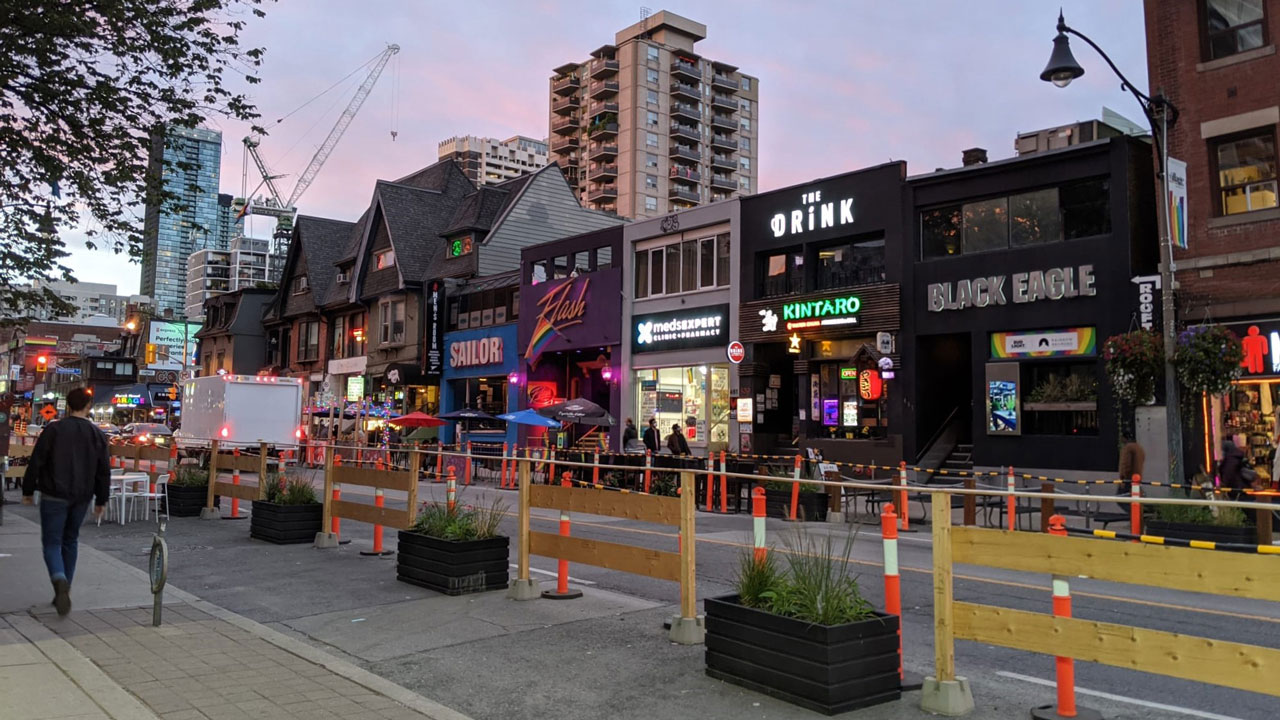
Offered on select weekends, this walking tour explores the evolution of 2SLGBTQ+ spaces in the city through the buildings and landscapes of The Village.
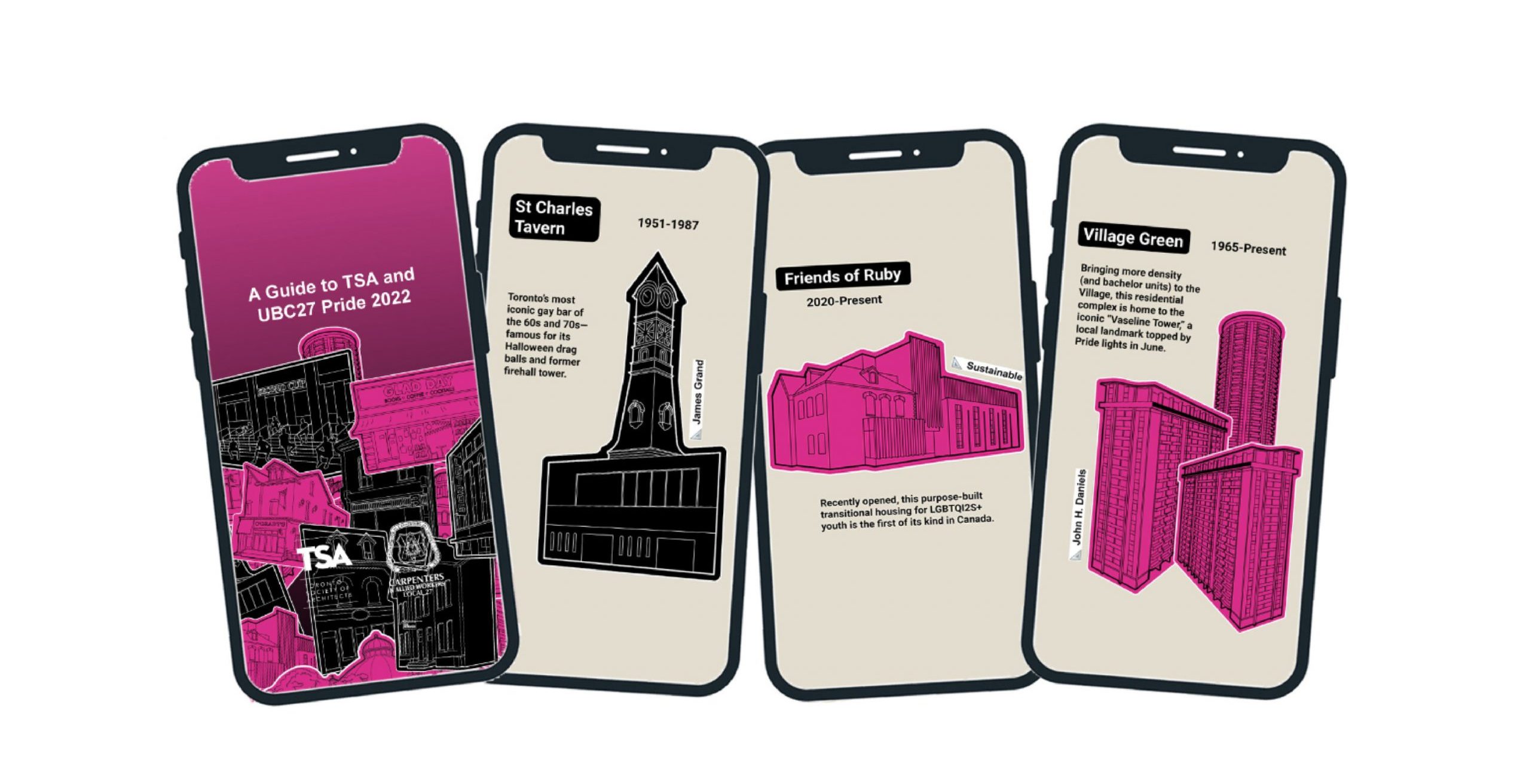
Guide to Queer Spaces
Compiled for Pride 2022, this illustrated guide to Toronto's Queer Spaces highlights 30 of the city's most iconic queer spaces, past and present.
Ideas Forum: Queer Spaces
Held in 2021, this forum asked artists, designers and architects to explore questions of queer space in Toronto and beyond in a series of fun and fast-paced presentations.
Watch Recording >FAQ
You’ve got questions? We’ve got answers! Check below for some of our most frequently asked questions about this project. Still have questions? Reach out to us at tsa@torontosocietyofarchitects.ca.
Our database has been built through years of archival and community research. Spaces featured have some queer association in its past or present, though it may not have originally been intended for that use. While the list goes well beyond what is outlined here, we have limited our database to collective or shared queer spaces, rather than private spaces (such as people's homes).
When we asked 2024 Pride Street Fair attendees to add their favourite queer spaces to our map, many identified their own homes and residences. We agree! Our presence within a space queers it, but their intimate, private nature felt quite distinct from the more collective gathering spaces we aimed to identify with this project.
Every year the database becomes more complete and complex. This database was most recently updated in June 2026 in preparation for the Pride Street Fair. It will continue to be updated annually as new information is gathered and confirmed.
Absolutely! This database is free for you to use and share, and in fact we encourage others to build on this research. We just ask that you please credit the Toronto Society of Architects, as well as any references or contributors that are highlighted as sources, when doing so.
With often conflicting and unreliable sources, it can sometimes be impossible to be exactly sure of the where and when of queer spaces. Particularly when a space was only temporarily frequented by members of the 2SLGBTQIA+ community, it can be challenging to identify a clear end-date for the space’s queer association. The dates on the list and map are based on the best available information. When only the decade was known, spaces are shown from the beginning to the end of the corresponding decade.
So much of our queer spaces research has depended on community input. If there is a space missing or you believe an entry needs correction, please use the form located at the top of this page to submit a correction. It is particularly helpful if you can provide some context or even sources which we can use to verify the information.
Thank You to our Contributors
This project has been made possible thanks to the efforts of countless individuals including Janice M., Kurtis C., Joël L., Adria M., Amanda E., Atik B., Benny V., Cherisse T., Eric W., Jake M., Joe W., Kate R., Mariana N., Rebecca P., Ryan F., Samantha B., Simon L., and Spencer L.
Thank you as well to members of the community who have contributed to this project, including the over one thousand individuals who added their memories to our 2024 Pride Street Fair map, and to the class at the University of Waterloo School of Architecture who helped us digitize these memories.
Use and Attribution
This database was created by the volunteers of the Toronto Society of Architects. It’s free to use and share, but we ask that you credit the TSA and any references or contributors that are highlighted as sources when doing so.
Supported By

